
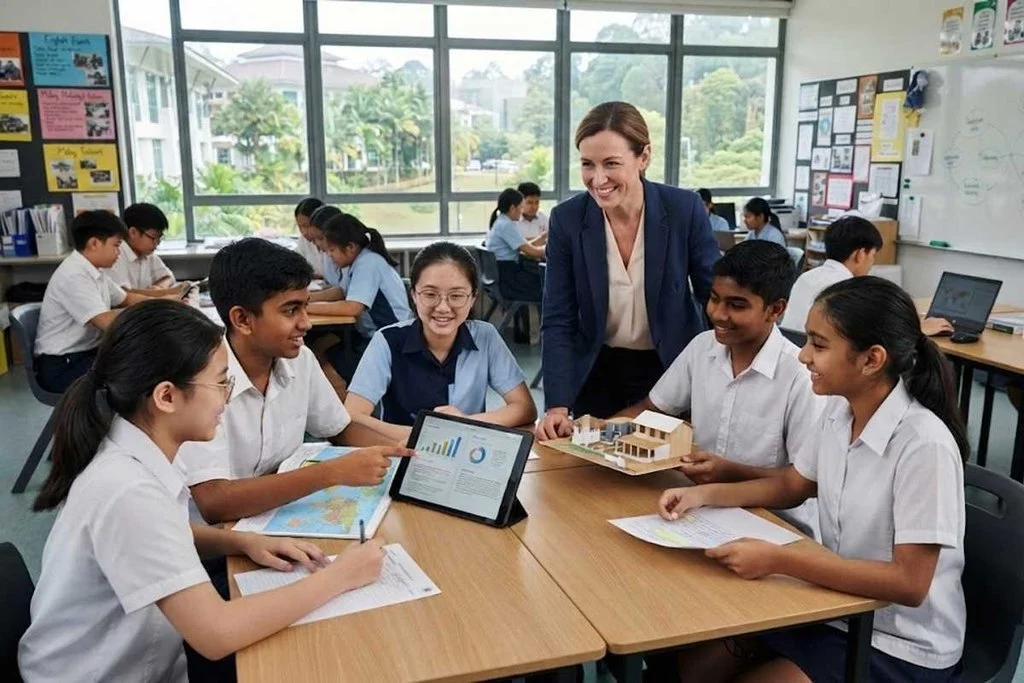
Choosing the right school is an important decision for parents who want their children to receive a strong academic foundation while also developing practical skills. A Private International School Malaysia generally follows a broad assessment approach that looks beyond traditional examinations. Students may be assessed through classroom activities, projects, presentations, assignments, tests, and their participation in different learning experiences.
The purpose of assessment is not simply to give students grades. It helps teachers understand what learners know, identify areas that need improvement, and adjust teaching methods according to individual needs. International schools may also use assessment methods influenced by international curricula, allowing students to develop academic knowledge alongside communication, creativity, critical thinking, and problem-solving abilities.
Classroom Tests
Short tests and quizzes are commonly used to check students’ understanding of recently taught topics. In a Private International School Malaysia, these assessments may include multiple-choice questions, short answers, structured questions, problem-solving exercises, or subject-specific tasks. Their format usually depends on the age of the learner and the curriculum followed by the school.
Classroom tests also give students opportunities to practice applying their knowledge under assessment conditions. Teachers can use the results to determine whether students have understood important concepts or whether certain topics require further teaching. Regular testing can also help learners become familiar with managing time and organizing their answers.
Projects and Assignments
Projects provide students with opportunities to demonstrate knowledge in ways that may not be possible through a conventional written test. Depending on the subject, learners may conduct research, prepare reports, create models, solve problems, or investigate real-world questions. These activities can connect classroom learning with practical situations.
Assignments also encourage students to work independently and develop research and communication skills. Teachers can assess factors such as accuracy, organization, creativity, reasoning, and the ability to present information clearly. Group projects may additionally provide opportunities to observe collaboration, responsibility, and communication between students.
Presentations
Presentations can form another part of student assessment, particularly in subjects where communication and explanation are important. Students may be asked to present research findings, explain a concept, discuss a topic, or demonstrate the results of a project. Teachers can assess both the quality of the content and the student’s ability to communicate it.
This method can help learners become more confident when speaking in front of others. It may also encourage students to organize their ideas logically and respond to questions. These skills can be useful beyond school because effective communication is relevant to university studies, professional environments, and everyday interactions.
Practical Work
Some subjects require students to demonstrate what they can do rather than simply explain what they know. In a Private International School Malaysia, science experiments, computer-based activities, art projects, laboratory work, physical education, and other practical tasks may contribute to assessment.
Practical assessment can show whether students are able to apply theoretical knowledge in an appropriate situation. Teachers may observe how learners follow instructions, use equipment, solve unexpected problems, record results, and explain their conclusions. This creates a more complete picture of learning than written work alone.
Major Examinations
Although international schools often use varied assessment methods, formal examinations can still have an important role. The exact examinations depend on the curriculum and academic programme offered by the school. Some international schools prepare students for internationally recognized qualifications, while others use different curriculum-specific assessment systems.
Formal examinations provide a structured way to measure students’ knowledge and application of concepts across a larger portion of the curriculum. They can also prepare older students for the assessment formats they may encounter in later education. However, examination results are generally more meaningful when considered alongside other evidence of student progress.
Feedback and Progress
Assessment becomes more useful when students receive clear feedback about their performance. Teachers may explain what a student has done well, identify areas requiring improvement, and provide guidance about the next steps. Constructive feedback can help students understand that assessment is part of the learning process rather than simply a measure of success or failure.
Parents may also receive progress reports, assessment results, teacher comments, or opportunities to discuss their child’s development. Regular communication can help families understand academic progress and areas where additional support may be useful. This creates a connection between the school, student, and parents.
Individual Development
A Private International School Malaysia may recognize that students have different learning needs, strengths, interests, and rates of development. Assessment can help teachers identify these differences and make informed decisions about classroom support. Instead of viewing assessment only as a way to compare students, schools can use it to understand individual learning journeys.
Teachers may consider academic performance together with skills such as collaboration, communication, independence, creativity, and critical thinking. The precise approach varies between schools and curricula, but a broader assessment model can encourage students to develop a range of abilities rather than focusing exclusively on memorizing information.
Technology in Assessment
Technology has also become increasingly useful in modern education. Depending on the school, students may complete digital quizzes, online assignments, computer-based projects, or other technology-supported activities. Digital tools can allow teachers to collect information efficiently and provide feedback on certain types of work.
Technology-based assessment can also give students experience with digital learning environments. However, technology is generally most effective when it supports clear educational objectives rather than being used simply because it is available. Teachers still play an important role in interpreting assessment results and understanding the context behind student performance.
Key Assessment Methods
A school may combine several assessment techniques to develop a broader understanding of student performance:
- Quizzes and tests: Used to check understanding of specific topics.
- Projects: Used to assess research, creativity, application, and problem-solving.
- Presentations: Used to evaluate communication and organization of ideas.
- Practical activities: Used to observe the application of knowledge and skills.
- Examinations: Used to measure broader academic achievement.
- Class participation: Used to understand engagement and contribution during lessons.
Using different methods allows teachers to recognize that students demonstrate their abilities in different ways. A learner who finds written examinations challenging may show considerable understanding through practical work, discussion, research, or presentations.
Why Should You Choose SJIIS?
St. Joseph’s Institution International School Malaysia (SJIIS) provides a well-rounded learning environment that combines academic development with character building, critical thinking, creativity, and practical skills. Its international educational approach encourages students to become confident, responsible, and independent learners while preparing them for future academic opportunities.
For more information about the school, its curriculum and learning opportunities, visit:
Final Thoughts
A Private International School Malaysia can use a combination of continuous assessment, tests, projects, presentations, practical activities, classroom participation, and formal examinations to understand student achievement. This varied approach provides teachers with multiple sources of information and can help identify both strengths and areas for development.
For parents, it is useful to look beyond the question of whether a school conducts examinations. Understanding how often students are assessed, what skills are measured, how feedback is provided, and how assessment results influence teaching can provide a clearer picture of the school’s educational approach. A well-structured assessment system should support learning, encourage improvement, and help students prepare for their future academic and personal goals.
