
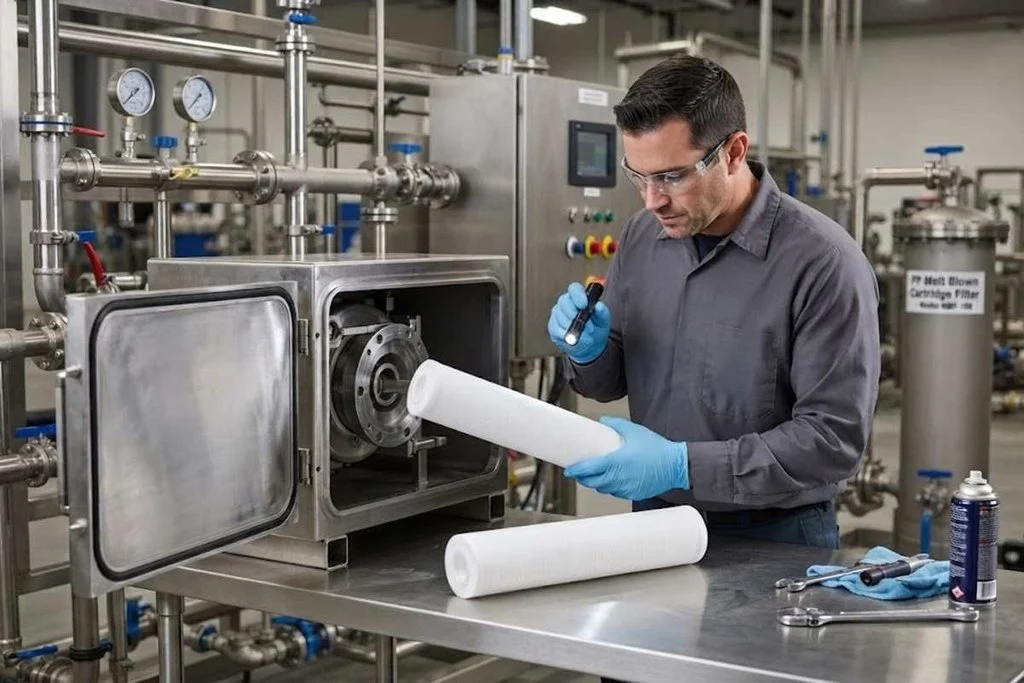
A PP melt blown filter is widely used in water treatment, industrial processing, food and beverage applications, chemicals, and other filtration systems. Its layered polypropylene structure is designed to capture suspended particles and impurities as fluid passes through the filter. However, even a high-quality filter requires proper handling and maintenance to support consistent filtration performance.
For businesses operating in Malaysia, regular maintenance is particularly important because filtration systems may be exposed to varying water quality, humidity, temperature, and demanding operating conditions. Understanding how to inspect, clean, replace, and handle a PP Melt Blown Filter Malaysia can help prevent unnecessary system problems and maintain efficient operation.
Inspect the Filter Regularly
The first step in maintaining a PP Melt Blown Filter Malaysia is regular inspection. Operators should monitor the cartridge and the filtration housing during normal system operation. Pressure gauges or differential-pressure indicators can provide useful information about the condition of the filter.
A noticeable increase in pressure difference between the inlet and outlet can indicate that the filter is becoming clogged. Reduced flow can also be a warning sign, especially when the system previously operated at a stable rate.
Visual inspection is useful as well. Look for unusual discoloration, deformation, cracks, damaged seals, or signs of leakage around the cartridge. Any physical damage should be investigated before the filtration system is returned to normal operation.
Monitor Pressure Drop
Pressure drop is one of the most useful indicators of filter loading. As contaminants accumulate within the polypropylene fibers, resistance to fluid flow generally increases. Monitoring this change allows operators to determine when the cartridge is approaching the end of its useful service life.
Instead of relying only on a fixed replacement interval, facilities can combine operating time with pressure and flow observations. This approach can provide a more practical understanding of actual filter performance.
The acceptable pressure differential varies according to the filter design and the equipment manufacturer’s recommendations. Operators should therefore follow the specifications provided for the particular cartridge and housing.
Keep the Housing Clean
Maintaining the filter housing is just as important as monitoring the cartridge itself. Dirt, sediment, microbial growth, or chemical deposits inside the housing can compromise filtration performance and potentially contaminate a newly installed cartridge.
Before installing a replacement cartridge, shut down the filtration system and follow the required isolation and depressurization procedures. Remove the used cartridge carefully and clean the housing using an appropriate method.
The housing should be inspected for scratches, cracks, corrosion, damaged threads, and other problems. Sealing surfaces should also be clean so that the replacement cartridge can sit correctly.
Check Seals and Connections
A properly installed cartridge cannot perform effectively if the housing seals are damaged. O-rings, gaskets, and other sealing components should be checked whenever the filter is replaced.
Look for signs of:
- Cracking or brittleness
- Flattening or deformation
- Cuts or tears
- Chemical deterioration
- Improper positioning
If a seal is damaged or has reached the end of its service life, replace it with a compatible component. Applying the wrong lubricant or using an incompatible sealing material may cause additional problems, so maintenance personnel should follow the equipment manufacturer’s instructions.
Handle the Cartridge Carefully
Proper handling can prevent accidental damage before the filter enters service. Avoid dropping, crushing, or dragging cartridges across rough surfaces. Even small physical defects can affect cartridge integrity and sealing.
When installing a new cartridge, make sure it is correctly aligned with the housing and any internal support components. Do not force the cartridge into position. If resistance occurs, stop and determine whether the cartridge size, orientation, or housing components are correct.
Clean handling is also important. Personnel should use appropriate protective equipment and avoid touching filtration surfaces unnecessarily.
Follow a Replacement Schedule
PP melt blown filters are consumable components, so maintenance eventually requires replacement. Attempting to extend cartridge life beyond its suitable operating condition can reduce filtration efficiency and place additional strain on the system.
The replacement interval depends on several factors, including contaminant concentration, water or fluid quality, operating hours, flow rate, and filter micron rating. A facility with high sediment levels may require more frequent replacement than one operating with relatively clean feed water.
A useful maintenance record can include:
- Installation date
- Filter model and micron rating
- Operating hours
- Initial and final pressure readings
- Observed flow rate
- Replacement date
- Reason for replacement
Keeping these records can help operators identify patterns and establish a practical maintenance routine.
Avoid Unnecessary Reuse
Many PP melt blown cartridges are intended for single-use applications. Their depth structure captures contaminants within the filter media, meaning conventional surface cleaning may not restore the original filtration capacity.
Attempting to wash or reuse a cartridge without specific manufacturer approval can affect its structure and filtration characteristics. It may also introduce contaminants into the system.
For this reason, operators should check the manufacturer’s recommendations before attempting any cleaning or reuse procedure. If the cartridge is designed for replacement rather than regeneration, installing a new compatible cartridge is generally the appropriate maintenance action.
Store Filters Properly
Proper storage helps protect unused cartridges from contamination and physical damage. Replacement filters should remain in their original packaging until they are ready for installation.
Store cartridges in a clean, dry area away from direct sunlight, excessive heat, chemicals, dust, and mechanical damage. In Malaysia’s humid climate, controlling the storage environment can be particularly useful for protecting packaging and maintaining product cleanliness.
Avoid placing heavy objects on filter cartons or storing cartridges directly on damp floors. A clean shelving system can provide better protection and easier stock rotation.
Use the Correct Filter
Maintenance begins with selecting the correct cartridge for the application. A filter with an unsuitable micron rating, size, material, or flow capacity may become overloaded quickly or fail to provide the intended level of filtration. Depending on the application, businesses may also consider alternatives such as a Pleated Filter Cartridge Malaysia for specific filtration requirements.
Before purchasing replacement cartridges, confirm the required specifications. Operators should consider the fluid being filtered, expected particle load, operating temperature, pressure, flow rate, and compatibility with the filtration housing.
Using the correct PP Melt Blown Filter Malaysia can reduce unnecessary replacement and support more stable system operation.
Create a Maintenance Routine
A structured maintenance routine makes filter management easier. Operators can establish daily, weekly, and monthly checks based on the importance and operating conditions of the filtration system.
Daily monitoring may focus on pressure and flow. Periodic inspections can examine the housing, seals, connections, and cartridge condition. Replacement records should be updated whenever a cartridge is changed.
Maintenance personnel should also follow workplace safety procedures when shutting down, depressurizing, and opening filtration equipment. If the system handles hazardous or aggressive fluids, additional protective measures may be necessary.
Why Go With Weligent?
Weligent Sdn. Bhd. provides industrial filtration solutions for businesses seeking reliable products for their water treatment and process filtration requirements. The company offers a range of filtration products designed to meet different industrial needs, with attention to product quality, application suitability, and customer support. Choosing a suitable filtration supplier can help businesses maintain their systems efficiently and ensure they have access to appropriate replacement products when required.
To learn more about Weligent Sdn. Bhd. and its industrial filtration solutions, visit the website below:
Final Thoughts
Maintaining a PP Melt Blown Filter Malaysia requires more than simply replacing cartridges when flow decreases. Regular inspection, pressure monitoring, housing cleaning, seal checks, proper handling, suitable storage, and timely replacement all contribute to reliable filtration.
Because cartridge life varies between applications, operators should use manufacturer recommendations together with actual system conditions when establishing maintenance intervals. A consistent maintenance program can help protect downstream equipment, maintain filtration performance, and reduce avoidable operating interruptions. With the right procedures and suitable replacement filters, businesses can keep their filtration systems working efficiently for longer periods.
