
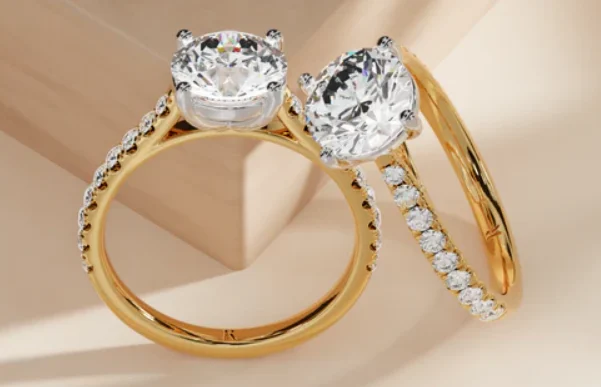
A diamond can be small in weight but impressive to the eye. Another diamond can be heavier on paper yet appear less graceful once set in a ring. This is one of the most common surprises for people who begin comparing diamonds seriously. Many buyers hear the word carat and immediately imagine visible size, but carat and size are not the same thing.
Carat is a measurement of weight. Size is what the eye perceives when looking at the diamond from above. The two are related, but they do not always move together in the way buyers expect. Shape, cut proportions, depth, table width, and setting style all influence how large a diamond appears. This is why a diamond’s certificate can tell you the carat weight, but it cannot fully describe the visual experience of seeing the stone in person.
For anyone choosing an engagement ring, comparing inherited jewelry, or trying to understand a diamond’s value before selling, this distinction matters. It can prevent overpaying for weight that is hidden in the wrong place and help buyers appreciate stones that look more balanced than their carat number suggests.
Carat Measures Weight, While Size Describes Appearance
Carat is a precise unit used to measure the weight of a diamond. One carat equals 0.2 grams. This measurement is important because diamond pricing is strongly influenced by weight, especially around well-known milestones such as half a carat, one carat, and two carats. A diamond that crosses one of these popular points can carry a higher price simply because it falls into a more desirable weight category.
Size, however, is not measured in carats. When people talk about how big a diamond looks, they are usually referring to its face-up appearance. This is the visible spread of the diamond when viewed from above, especially when it is mounted in jewelry. Two diamonds can both weigh one carat, yet one may look larger because it has a wider surface area, while the other may carry more weight in its depth.
This is where confusion often begins. A buyer may believe that choosing a higher carat automatically means getting a diamond that looks larger. In many cases, it may. But not always. A diamond’s visible size depends on how the stone was cut and how its weight is distributed. Carat tells you how heavy the diamond is; it does not guarantee how large it will appear on the hand.
Why Two Diamonds of the Same Carat Can Look Different
The way a diamond is cut has a direct effect on how its weight is presented. A well-proportioned diamond balances depth and surface spread so that light can enter, reflect, and return beautifully to the eye. A diamond that is cut too deep may carry weight underneath the surface, making it appear smaller from above. A diamond that is cut too shallow may look wider, but it may lose brilliance if light escapes instead of reflecting back.
Shape also plays an important role. Oval, pear, marquise, and emerald-cut diamonds may appear larger than round diamonds of the same carat weight because their outlines cover more length or surface area. A one-carat oval can create a longer visual line on the finger, while a one-carat round diamond may appear more compact but often offers strong brilliance when well cut.
This does not mean one shape is better than another. It simply means that carat weight should be understood in context. A buyer who focuses only on weight may miss the visual effect created by shape and proportion. A slightly lower-carat diamond with excellent spread and attractive cutting can sometimes feel more impressive than a heavier diamond that hides weight in the lower part of the stone.
For readers comparing diamonds before making a decision, BKK Diamond’s explanation of the difference between diamond carat and size offers a useful foundation for understanding why the number on a certificate is only one part of the full picture.
The Role of Cut Proportion in Visual Presence
Cut is often the deciding factor in whether a diamond looks lively, balanced, and elegant. While carat affects weight, cut affects how that weight is shaped. A diamond with excellent proportions can appear bright and pleasing even if it is not the largest stone in the tray. On the other hand, a heavier diamond with poor proportions may look dull or visually smaller than expected.
Depth percentage, table size, crown angle, pavilion angle, and symmetry all influence how the stone handles light. These details may sound technical, but they are responsible for the sparkle and face-up presence buyers notice first. A diamond that returns light well can feel more luxurious because it captures attention through brilliance rather than size alone.
This is why experienced jewelers often encourage buyers to compare diamonds in person instead of judging only by carat weight. The eye responds to proportion, brightness, and balance. A stone with slightly lower carat weight may look more refined if it has better cutting and stronger light performance.
For engagement rings, visual presence also depends on the setting. A delicate band can make a diamond appear larger, while a heavy setting may reduce the sense of openness around the stone. Halo designs, bezel settings, prong styles, and side stones can all change how the center diamond is perceived. The diamond’s size is not only in the stone itself; it is also in how the design presents it.
How Buyers Can Make Smarter Diamond Comparisons
A smarter diamond comparison begins by separating what is measured from what is seen. Carat weight is measurable and objective. Visual size is partly objective and partly perceptual. Both matter, but they should not be treated as the same thing.
When comparing diamonds, buyers should look at the carat weight, but they should also ask how the diamond faces up. Does it appear balanced? Does it carry too much depth? Does the shape create the look the buyer wants? Does the stone feel bright and clean in natural light? These questions often reveal more than carat alone.
It is also helpful to compare diamonds near popular weight thresholds. A diamond just under one carat may look nearly identical to a one-carat stone but may be more practical in price. A 0.90-carat diamond with strong cut quality may provide excellent visual appeal without the price jump often attached to the one-carat mark. This is not always the right choice for every buyer, but it shows why understanding carat and size can lead to better decisions.
For sellers, the distinction matters as well. A diamond’s carat weight will be part of the appraisal, but the final value will also depend on cut, color, clarity, certification, condition, and market demand. A heavier diamond is not automatically more valuable if the overall quality is weak. Likewise, a well-cut diamond with slightly lower weight can still hold strong appeal.
Conclusion
The misunderstanding between carat and size is one of the most important lessons in diamond education. Carat tells us how much a diamond weighs, while size describes how the diamond appears to the eye. They are connected, but they are not identical. A higher carat number may suggest a larger stone, but the final visual effect depends on shape, cut, proportion, and setting.
This difference is especially important because diamonds are emotional purchases as well as valuable objects. Buyers often want a stone that feels beautiful, balanced, and meaningful, not simply one with the highest number on paper. Sellers also benefit from understanding this distinction because it helps them interpret appraisal conversations with more confidence.
A diamond should be judged as a complete object. Weight matters, but so does light. Measurement matters, but so does presence. The most satisfying diamond is not always the heaviest one. It is the one where carat, proportion, brilliance, and design work together naturally.
When buyers understand that carat is a measure of weight rather than a guarantee of visible size, they begin to see diamonds with more careful eyes. They can compare stones more intelligently, ask better questions, and appreciate the subtle craftsmanship that turns a measured gemstone into a piece of jewelry with real character and lasting value.
