
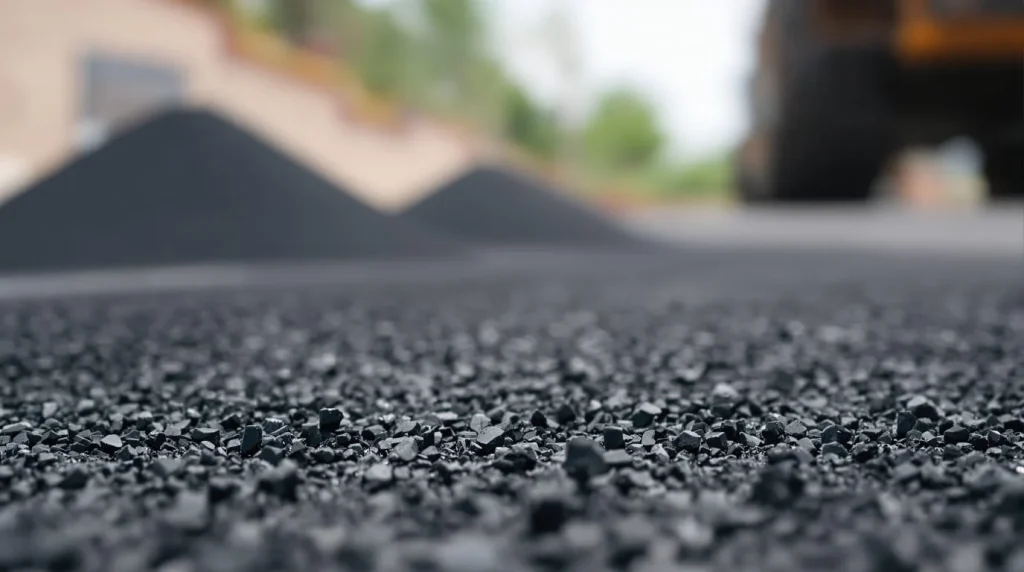
When a road milling crew finishes a job, they leave behind something most contractors underestimate: a stockpile of reclaimed asphalt pavement that still has significant value. Asphalt millings are one of the most reusable materials in construction, yet they regularly end up in landfills or sitting idle on the side of a project site. With the right approach and a compact impact crusher for asphalt recycling, contractors can process those millings directly on the jobsite and turn them into a high-quality road base material — cutting costs, reducing waste, and keeping projects moving.
What Are Asphalt Millings and Why Do They Matter?
Asphalt millings — also called reclaimed asphalt pavement or RAP — are the by-product of milling existing road surfaces during repaving or road rehabilitation work. The process shaves off the top layer of worn asphalt and leaves behind a granular material that retains the original aggregate and residual binder from the old surface.
That residual binder is what makes millings valuable. When processed and compacted correctly, it re-activates under load and temperature, binding the aggregate together to form a dense, stable surface. For contractors doing road work, parking lots, driveways, or site access roads, asphalt millings offer a cost-effective alternative to purchasing new crushed stone or gravel — provided the material is handled properly.
Why It Makes Sense to Recycle Asphalt Millings On Site
The decision to recycle asphalt millings on site rather than haul them away is primarily a financial one. Transporting millings off-site carries tipping fees, truck costs, and the time of multiple loads. Then, to complete the same job, contractors often purchase new aggregate to use as base material — paying twice for what could have been handled once.
On-site processing eliminates that double cost. The millings are crushed and graded where they sit, then placed directly as base material in the same project. There are no disposal fees, no incoming aggregate deliveries, and no lag time between demolition and base preparation. The project becomes self-sufficient at the material level, which is exactly where contractors want to be.
Beyond the cost case, on-site recycling also reduces truck traffic on and around the jobsite — a meaningful advantage on urban road projects or sites with access restrictions.
How to Process RAP Material on a Jobsite
To process RAP material on a jobsite effectively, the workflow follows a straightforward sequence. First, the milled asphalt is collected and fed into a mobile impact crusher. The impact mechanism breaks down larger chunks — especially clumps that have cooled and hardened after milling — into a consistent, granular output. The crusher’s apron setting controls the final output size, which typically ranges from three-quarters of an inch to just over three inches depending on the intended application.
For projects where a specific aggregate gradation is required, pairing the crusher with a mobile screener allows contractors to classify the output into separated size fractions. Oversized material loops back to the crusher for reprocessing, and the final product comes off the screen ready for placement. The entire process happens in one continuous pass, without stockpiling or re-handling material.
Impact crushers are particularly well-suited for RAP processing because the impact mechanism breaks the aged binder coating off the aggregate, producing a cubical, well-graded output that performs consistently when placed and compacted.
Asphalt Millings Road Base Compaction: What Contractors Need to Know
Getting asphalt millings road base compaction right is the difference between a surface that performs well for years and one that ruts and shifts under traffic. Millings behave differently from virgin crushed stone, and contractors unfamiliar with the material sometimes underestimate what proper placement requires.
A few key principles apply:
• Layer thickness matters — place millings in lifts no deeper than three to four inches and compact each lift before adding the next. Thicker lifts compact unevenly and leave soft spots.
• Temperature affects compaction — millings compact best when slightly warm. On cold days, allowing the material to warm in the sun before compaction improves density.
• Moisture helps — a light application of water before rolling activates the residual binder and aids in achieving a dense, stable finish.
• Use a vibratory roller — a static roller alone does not achieve adequate density in recycled asphalt. A vibratory drum roller produces significantly better results.
When placed and compacted correctly, a processed millings base is dense, load-bearing, and weather-resistant — outperforming loose gravel in most light-traffic applications.
The Right Asphalt Crushing Equipment Makes the Difference
Reclaimed asphalt pavement reuse is only as practical as the equipment available to process it. For contractors who handle regular road work, parking lot demolition, or site preparation involving asphalt removal, having the right asphalt crushing equipment on-site removes the logistical barrier that sends most RAP to the landfill.
The best asphalt crushing equipment for contractors combines mobility, output control, and low operating cost. A compact impact crusher ticks all three boxes. It can be transported between sites without specialist haulage, set up in under an hour, and adjusted to produce the output size the project demands. For contractors running multiple road or paving projects simultaneously, one machine can serve all of them — eliminating disposal costs across every job it touches.
Komplet America’s K-IC 70 is built precisely for this application. Rated at up to 90 tons per hour with an adjustable output from three-quarters of an inch to just over three inches, it processes asphalt millings efficiently and consistently — producing clean, spec-grade RAP base material ready for immediate placement. Its compact tracked design means it fits on active road projects and tight site conditions where larger equipment simply cannot operate.
Conclusion
Asphalt millings are not a waste problem — they are a material opportunity that most contractors are currently paying to throw away. With the right mobile impact crusher and a straightforward on-site processing workflow, those millings become a high-performance road base that saves money on every project they go into. From reclaimed asphalt pavement reuse on highway jobs to driveway base on small residential contracts, the application is consistent: process it, compact it, and put it to work.
Contact Komplet America today to request a quote on the K-IC 70 and find out how much your next asphalt project could save by keeping millings on-site.
