
Accurate regulatory reporting is a critical component of every anti-money laundering program. One of the most important reporting requirements for financial institutions is the Currency Transaction Report (CTR). Errors, omissions, and inaccurate customer information can expose organizations to regulatory scrutiny, financial penalties, and operational inefficiencies. For this reason, compliance officers must establish a strong validation process before submitting reports to regulators.
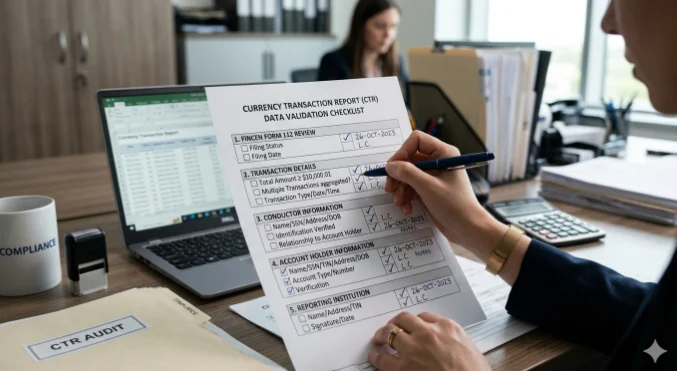
A well-structured review framework helps ensure that transaction data, customer details, and reporting thresholds are properly verified. This article outlines a practical CTR data validation checklist that can help compliance teams strengthen reporting accuracy and support broader AML compliance efforts.
Understanding the Importance of CTR Validation
A CTR is filed when a cash transaction exceeds the reporting threshold established by regulatory authorities. Since these reports play a significant role in financial crime detection, regulators expect financial institutions to maintain accurate and complete records.
In the context of CTR in AML, data validation is more than a procedural task. It serves as a safeguard against reporting inaccuracies that could undermine compliance programs. Even minor errors can result in report amendments, audit findings, or increased regulatory attention.
Effective validation also improves operational efficiency by reducing the need for corrections and resubmissions.
Key Areas to Review Before Submission
Compliance officers should verify multiple data elements before filing. A structured review process helps identify discrepancies and ensures consistency across systems and records.
The following checklist can support a thorough validation process:
- Confirm customer identification details match official records.
- Verify transaction amounts, dates, and branch information.
- Review account ownership and beneficiary information for accuracy.
- Check for duplicate records or previously submitted reports.
- Ensure all mandatory fields are completed according to regulatory requirements.
Using a standardized checklist helps maintain consistency across compliance teams and reduces the risk of oversight.
Validating Customer Information
Customer information is one of the most common sources of reporting errors. Names, addresses, identification numbers, and account details should be verified against official documentation and internal records.
Compliance officers should pay close attention to inconsistencies that may arise from manual data entry or system integration issues. A mismatch between customer records and submitted information can trigger additional review requests from regulators.
Strong customer data governance contributes significantly to the quality of every CTR AML process.
Reviewing Transaction Data Accuracy
Transaction details must accurately reflect the underlying cash activity. Validation should include a review of transaction amounts, dates, locations, and related account information.
Institutions handling large transaction volumes often rely on automated systems to generate reports. While automation improves efficiency, compliance teams should still conduct periodic reviews to ensure system-generated information remains accurate.
Regular quality assurance testing can help identify recurring issues and improve reporting reliability over time.
Identifying Common Validation Errors
Many reporting issues stem from preventable mistakes. Understanding common errors allows compliance officers to strengthen internal controls and reduce filing risks.
Frequent validation problems include incomplete customer records, incorrect transaction amounts, duplicate submissions, and inaccurate account details. In some cases, data mapping issues between core banking systems and compliance platforms can create reporting discrepancies.
Addressing these challenges early helps improve the accuracy of every CTR report in banking and reduces the likelihood of regulatory concerns.
Strengthening Internal Controls
A robust validation process should be supported by clear internal policies and procedures. Compliance teams should document validation requirements, establish review responsibilities, and maintain records of completed checks.
Training programs also play an important role. Employees involved in transaction monitoring and reporting should understand data quality expectations and escalation procedures.
Periodic audits can further strengthen controls by identifying process weaknesses and highlighting opportunities for improvement.
Leveraging Technology for Better Validation
Modern compliance technology can significantly improve reporting accuracy. Automated validation rules, exception management tools, and data quality monitoring solutions help compliance officers detect issues before submission.
Organizations that integrate reporting workflows with transaction monitoring systems often benefit from improved data consistency and reduced manual effort. Technology also provides greater visibility into reporting processes, making it easier to demonstrate compliance during examinations and audits.
As regulatory expectations continue to evolve, leveraging advanced validation capabilities can help institutions maintain high reporting standards.
Conclusion
Accurate reporting remains a fundamental requirement for effective AML compliance. A structured validation process helps compliance officers identify errors, maintain data integrity, and reduce regulatory risk. By reviewing customer information, verifying transaction details, strengthening internal controls, and utilizing technology, institutions can improve the quality of their reporting framework.
Implementing a comprehensive validation checklist not only supports regulatory obligations but also enhances the overall effectiveness of financial crime compliance programs. As reporting requirements become increasingly complex, proactive data validation will remain a critical element of successful compliance operations.
